
 CONFERENCE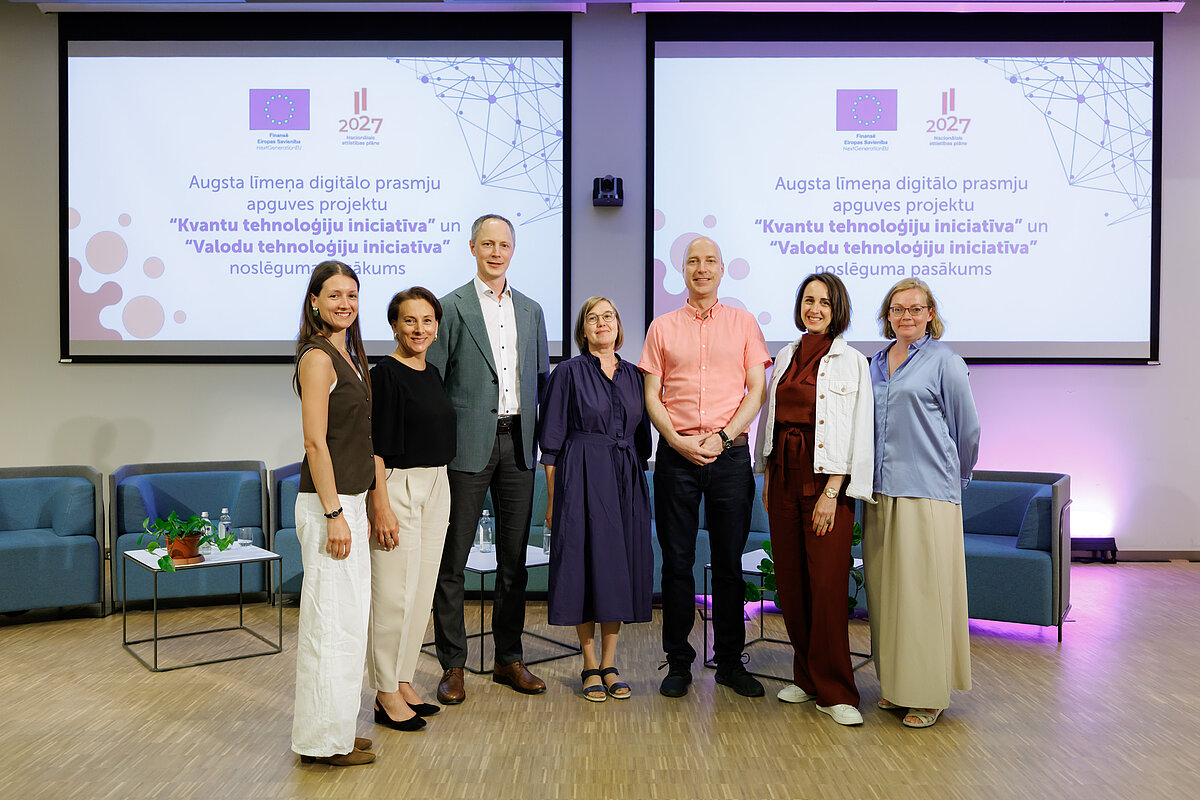
The project brought together the University of Latvia, Riga Technical University, Rīga Stradiņš University, the Institute of Mathematics and Computer Science of the University of Latvia, the Institute of Literature, Folklore and Art of the University of Latvia, and the language technology company Tilde to jointly develop a modern language technology ecosystem in Latvia.
During the project, nine internationally competitive study modules were developed across different levels of higher education, combining expertise in computer science, linguistics, artificial intelligence, and the digital humanities. These courses are available both as part of traditional university programmes and through online and lifelong learning formats, making them accessible to a broad range of learners.
One of the project's most significant achievements has been the development of human capital. More than 1,088 students and professionals acquired advanced digital skills in language technologies through the project, substantially exceeding the original target of 820 participants. In addition, 14 lecturers and researchers were trained to ensure the long-term sustainability of the newly established study programmes.
The project also made a significant contribution to research. During its implementation, project partners published 19 international scientific papers in high-impact journals and conference proceedings, developed new language resources, speech and text processing solutions, and advanced the application of large language models for the Latvian language. At the same time, the consortium secured more than €9 million in additional funding through national and international research projects, exceeding the original target by more than ninefold.
To support sustainable research and innovation, the project also established one of the most powerful artificial intelligence computing infrastructures in Latvia. This infrastructure will support the continued development of language technology solutions, the training of large language models, research and educational activities, and the implementation of future national and international research projects.
The project's outcomes demonstrate that Latvia has established a strong collaborative platform bringing together universities, research institutes, and industry in the fields of language technologies and artificial intelligence. The newly developed study programmes, research results, technological infrastructure, and long-term partnerships provide a solid foundation for strengthening Latvia's competitiveness within the European digital landscape.
Although the project has formally concluded, the partners will continue implementing their jointly developed seven-year strategic development plan. This includes maintaining and expanding the study modules, further developing the research infrastructure, and pursuing new collaborative projects. Future activities will focus on advancing Latvian large language models, speech and multimodal data processing, the development of safe and trustworthy artificial intelligence solutions, and closer integration into European research infrastructures and international programmes.
The Language Technology Initiative has become a major contribution to Latvia's digital transformation, creating a lasting foundation for education, research, and innovation in the fields of language technologies and artificial intelligence.
The implementation of the “Language Technology Initiative” project (No. 2.3.1.1.i.0/1/22/I/CFLA/002) was funded by the European Union Recovery and Resilience Facility and the state budget.
